If you’re a Los Angeles homeowner weighing solar in 2026, the landscape has shifted. The federal tax credit for purchased systems is gone, electricity rates keep climbing, and the gap between a good deal and a bad one is wider than ever. This guide breaks down exactly what residential solar panels cost in LA right now, where the money goes, and how to make sure you’re not overpaying.
Key Takeaways
- In 2026, typical installed residential solar in Los Angeles costs about $2.10–$3.00 per watt, with California Solar Quotes per year translating to roughly $13,000–$32,000+ for most homes depending on system size. These figures reflect total installation cost before any local incentives and with no 30% federal tax credit, which expired for homeowner-owned systems after December 31, 2025.
- LADWP customers maintain favorable net metering arrangements compared to SCE customers under NEM 3.0, so payback periods for many city of LA residents land in the 6–9 year range even without the federal credit. Your electric bill size and roof characteristics are the two biggest variables that swing long term savings.
- Panels themselves represent only about 10–20% of total panels cost. Electrical work, permitting, labor, and soft costs drive the bulk of what you pay for installing solar panels in Los Angeles.
- Financing choice matters more than ever in 2026. A cash purchase usually provides the best long-term savings, while a solar loan can increase total costs by 43% or more due to interest payments and dealer fees. Solar leases and power purchase agreement structures still exist but involve trade-offs around ownership and property value.
- Customized quotes are essential in LA because shading, roof age, roof complexity, and which utility serves your home can dramatically change the final price and payback period.
Current Cost of Solar Panels in Los Angeles in 2026
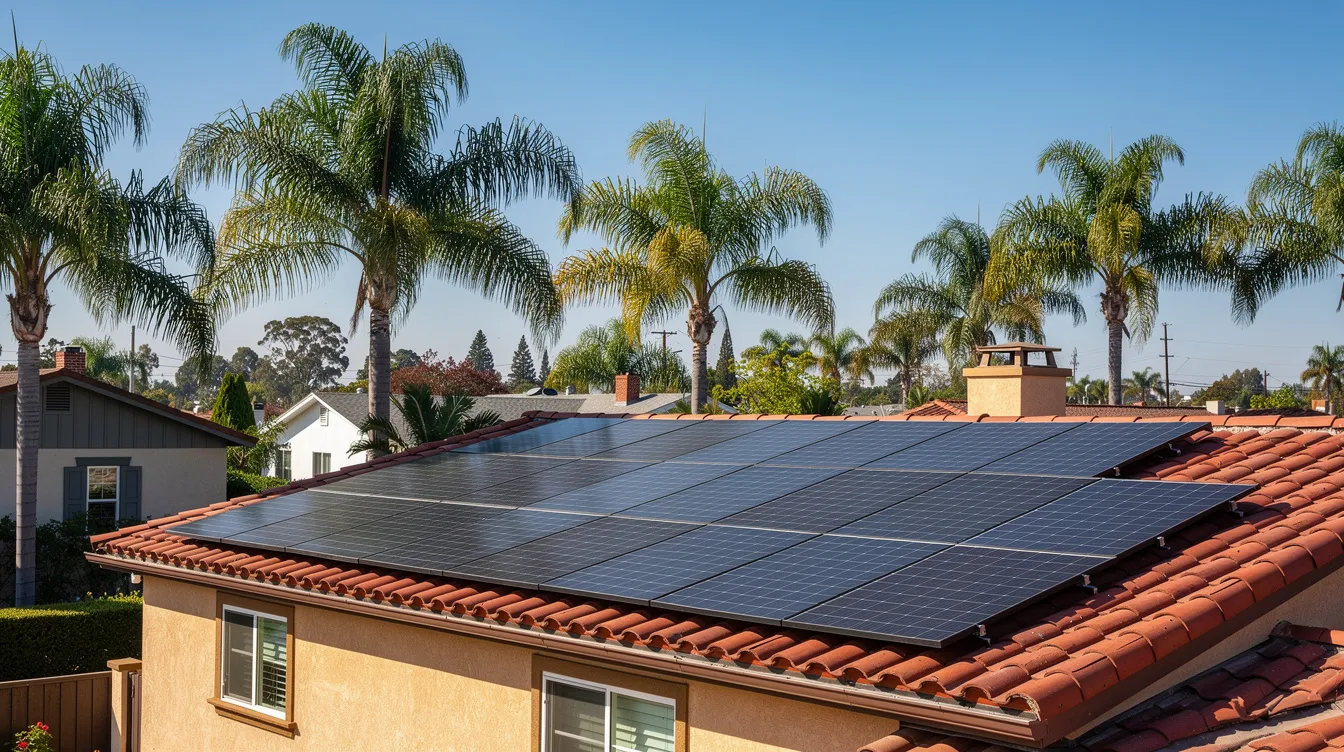
Here’s the direct answer: residential solar panels in Los Angeles average $2.10 to $3.00 per watt installed in 2026. Compared to what LADWP charges which is above $4.40 per watt. According to EnergySage marketplace data, the average system runs about $2.51 per watt for a roughly 9.85 kW average system size, putting the gross price at approximately $24,700 before incentives. Solar panel costs vary by location due to labor differences, and LA sits slightly above the broader California average because of higher labor rates and permitting overhead.
To put this into practical terms:
- A 5000 kW system at $2.80–$3.20 per watt costs about $14,000–$16,000
- An 8000 kW system runs about $20,000–$26,000
- A 7,200 kW solar panel system costs $21,816 before incentives at the national average of about $3.03 per watt
These prices assume a turnkey solar installation – solar equipment, design, labor, permits, and utility interconnection included. They do not include a 30% federal tax credit because the expiration of the federal residential clean energy tax credit affects solar installation costs starting 2026.
Los Angeles solar pricing is influenced by both city and county building departments, with some variance across jurisdictions. Quotes below about $2.00 per watt in LA are uncommon and may be red flags for missing scope or hidden costs.
What Solar Costs Per Watt in Los Angeles vs California Overall
Cost per watt is the single best metric for comparing solar quotes. It normalizes everything – different system sizes, roof types, equipment brands – into one number that ties directly to energy output and long term savings. Comparing installation costs by price per watt is advisable for homeowners evaluating multiple quotes.
Here’s how LA stacks up in 2026:
Market | Typical Cost Per Watt |
|---|---|
Los Angeles | $2.10–$3.00 |
California statewide (avg $21,235) | $2.00–$3.05 |
National average | $2.70–$3.60 |
Dense urban labor markets, higher permitting overhead, and more complex roofs in older LA housing stock push LA’s cost per watt slightly above statewide averages. Solar panels cost about $2.60 per watt before incentives nationally in 2026, while OC Solar reports $2.50–$3.50 per watt for California.
Typical LA price ranges by situation:
- Larger systems (10–13 kW), simple roof: ~$2.50–$2.70 per watt installed
- Mid-size (6–8 kW), standard roof: ~$2.70–$3.25 per watt
- Small systems (≤5 kW) or systems adding batteries: often above $3.30 per watt
While “cost per square foot of roof” sometimes appears in conversations, per watt remains far more reliable because it connects directly to how much electricity your system will produce.
Example System Prices for Los Angeles Homes
Let’s convert per-watt solar pricing into full system price examples for common LA home scenarios. These focus on residential solar, not commercial.
- Small 4 kW system (low-usage home or apartment-style property): ~$11,200–$13,000 total price
- Typical 6–7 kW family home: ~$16,800–$22,400 total cost
- Large 10 kW system (home with pool, EV charger, or heavy AC): ~$26,000–$32,000
- 12 kW solar panel installation: costs approximately $31,135 in 2026
- Adding a battery (Tesla Powerwall 3 or equivalent): adds roughly $10,000–$14,000 to any system above. Battery storage integration can significantly increase the initial cost of solar installations.
These examples assume standard roof characteristics – asphalt shingle, 1–2 stories, moderate slope, minimal shading. Complex roofs or tile materials push costs higher.
At Performance Lab of California, we’re not solar installers – but we work with athletes and active families across LA who care about managing their monthly payment obligations smartly. We encourage clients to compare these system size examples against their actual electric bill to estimate the real cash-flow impact.
How the Federal Solar Tax Credit Changed for 2026
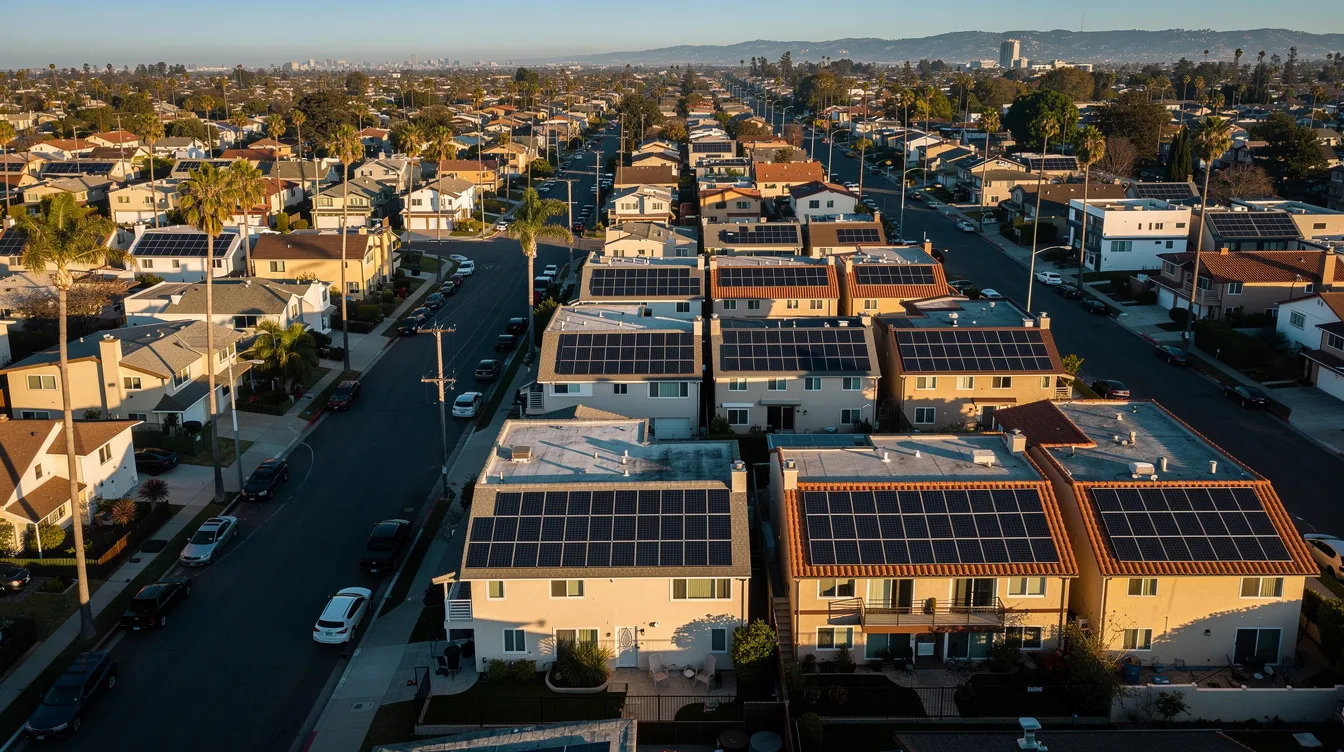
Here’s the biggest shift for 2026: the federal solar tax credit is 30% of installation costs – but only for systems installed through December 31, 2025. The 30% Residential Clean Energy Credit under Section 25D expired for homeowner-owned systems after that date. Homeowners save an average of $6,545 from the federal tax credit – but only if their system was placed in service before the cutoff.
Systems physically completed and placed in service in 2025 may still claim 30% on 2025 tax returns, even if some paperwork wraps up in early 2026. That’s different from projects that start construction in 2026.
Federal support now primarily flows through the commercial 48E credit, which benefits third-party owners of solar assets. This means a solar lease or power purchase agreement can still indirectly pass savings to LA homeowners through lower monthly rates – but you won’t claim a tax credit yourself.
Many online solar pricing calculators are outdated in 2026 because they still automatically subtract 30%. LA homeowners should calculate payback without assuming this credit unless they’re entering a lease or PPA arrangement. Consult a tax professional before making assumptions about your personal eligibility, but budget as if there is no federal residential credit for purchased systems.
Los Angeles-Specific Incentives and Utility Programs
Even without the 30% federal credit, Los Angeles residents benefit from state incentives, local incentive programs, and utility offerings that reduce the cost of solar and improve long term savings. Local incentives can reduce solar costs by hundreds or thousands of dollars. While states like Massachusetts, New Jersey, and Washington D.C. offer top incentives nationally, LA has its own advantages.
Property tax exclusion: California still excludes active solar energy systems from property tax reassessment. Adding solar panels won’t trigger higher property taxes – significant in high-value LA neighborhoods where solar rebates directly lower the upfront cost of installations.
LADWP net metering: LADWP’s program credits homeowners for excess solar generation at near-retail rates, which is considerably more favorable than the introduction of California’s Net Billing Tariff (NEM 3.0), which impacts solar credit value for excess energy exported to the grid under investor-owned utilities like SCE. This difference alone can shave years off your payback period.
SGIP rebates: Income-qualified customers in LA County can access Self-Generation Incentive Program rebates that substantially reduce battery costs for backup power, making storage more affordable. Demand for home battery systems has increased due to lower export compensation values under NEM 3.0.
Solar incentives and program budgets can change yearly. Verify current LADWP, SCE, and state-level offerings at the time of installing solar panels.
Cost Breakdown: Where the Money Goes in an LA Solar Quote
Solar panels themselves are only a fraction of the total cost of solar. Understanding the cost breakdown helps you spot inflated quotes and hidden costs.
Key line items in a typical Los Angeles solar quote:
- Solar panels (modules): Often around 10–20% of total system cost. Choosing high-efficiency solar panels can raise material costs for installations, but high-quality solar panels may improve long-term performance and energy production.
- Inverters, racking, and wiring: String inverters tend to be less expensive than microinverters. This solar equipment package typically represents another 10–20%.
- Labor: Installation costs for installing solar panels include safety measures on tall or steep LA roofs. Complex roofs drive this up significantly.
- Permitting, plan review, inspections: Permitting and installation fees can significantly affect overall solar project costs. Fees vary between the City of LA and surrounding municipalities.
- Electrical panel upgrades: Older homes may require electrical panel upgrades for solar systems. Many LA homes have 100-amp service; upgrades commonly add $2,500–$4,500.
Premium solar equipment can increase installation costs by 25% compared to standard-tier panels and inverters, but the trade-off is often higher annual production and longer warranty coverage.
Soft costs – sales commissions, design, engineering, overhead – can form 30–40% of the price in the LA metro due to higher wages and compliance requirements. These are real expenses, but they’re also where the biggest variation between quotes tends to appear.
Hidden Costs to Watch for in Los Angeles Solar Projects
Reputable installers are transparent, but many homeowners still encounter hidden costs that affect the real system cost and long term savings.
Common items to watch for:
- Roof repairs or replacement required before installing solar panels, especially on 20+ year-old roofs. Removing and reinstalling panels later doubles labor costs.
- Upcharges for tile, metal, or flat roofs – common in Los Angeles architecture and frequently underquoted.
- Structural engineering sign-off for older hillside or seismic-risk homes, which can add several hundred to over a thousand dollars.
- Trenching or conduit runs for detached garages or ADUs, a frequent layout in LA neighborhoods.
Financing-related hidden costs deserve special attention. Dealer fees can add 20% to 50% to financed solar costs, even when the monthly payment looks attractive on paper. These fees inflate the apparent cost per watt and aren’t always disclosed clearly in initial proposals.
Insist on a written, line-item cost breakdown and ask what happens if extra electrical or roof work is discovered after the project starts. Transparent, up-front planning reduces surprises and leads to a smoother, more predictable payback period.
How Roof Characteristics Affect Solar Panel Cost in Los Angeles
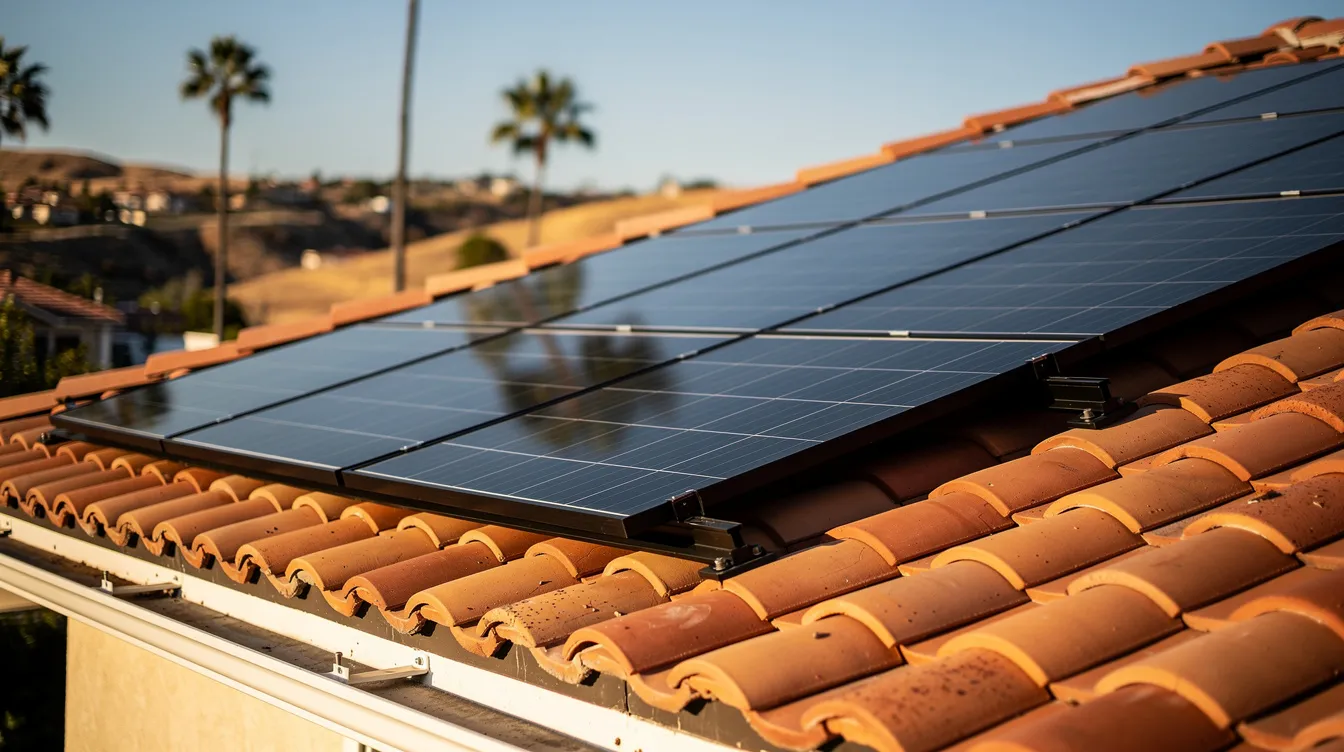
LA’s mix of flat roofs, clay tile, and older multi-plane designs has an outsized impact on panels cost compared to simpler suburban layouts in other regions. Complex roof designs increase installation labor costs meaningfully.
Complex roofs with many planes, skylights, or dormers increase labor time and racking hardware, often adding $0.20–$0.40 per watt to the cost per watt of installing solar panels. This is where fewer panels on a simpler roof can actually save more money than trying to maximize coverage on a difficult one.
South-facing or southwest-facing roofs with minimal shading from palm trees and neighboring buildings can use fewer panels to offset the same electric bill, lowering total cost and improving payback. Conversely, shaded or east/west-oriented roofs may require more panels or highest efficiency modules to reach the same annual production, increasing cost and potentially requiring multiple roof surfaces.
Ask your installer for a shading and production report – tools like Aurora or Helioscope model each roof surface so you can see exactly how roof characteristics drive the cost of solar and energy output.
Electric Bills, Usage, and System Size in Los Angeles
System size is the single biggest driver of cost of solar. Factors that influence solar costs include system size and energy needs – and that size is determined by electricity usage across a full year, not by square footage alone. System size impacts total solar installation costs significantly.
Typical LA homes use 6,000–10,000 kWh per year. But higher electricity usage requires more solar panels installed – homes with pools, EVs, or extensive air conditioning can exceed 12,000–15,000 kWh annually, meaning they need more panels and a larger solar energy system.
A useful rule of thumb: many LA rooftop systems produce about 1,300–1,600 kWh per installed kW per year, depending on orientation and shading. Dividing your annual usage by this range gives an initial target system size.
Rising Southern California electric rates – often $0.30–$0.40 per kWh for higher usage tiers – make offsetting more electricity from the grid increasingly valuable. But a bigger system also means a bigger upfront cost.
Gather 12 months of electric bills before getting quotes so installers can accurately size systems and estimate a realistic payback period.
Long-Term Savings and Payback Period for Los Angeles Solar
Even without the 30% federal tax credit, high LA electric rates keep the typical payback period in the 6–9 year range for many homeowners with good sun exposure. The average payback period for solar panels nationally is about 10 years, but LA’s high rates and strong sunshine improve on that for well-designed systems.
How payback works in practice:
- A ~$20,000 cash system saving ~$2,200 per year has a ~9-year simple payback
- A similar system under a low-interest loan might add 1–2 years but still produces 15+ years of net savings after payoff
Solar panels typically last 25 years or more, and they generate free electricity for decades after the system pays for itself. Homeowners save $41,000 to $155,000 over 25 years, and most homeowners earn back installation costs several times over.
LADWP-served homes often see faster payback than SCE-served areas because export credits sit closer to retail rates, making every extra kilowatt-hour of more electricity produced more money in your pocket.
Financing Options in 2026: Cash, Loans, Leases, and PPAs
How you pay can change the effective cost per watt and long term savings as much as the hardware you choose. Here’s how the major options compare as a financial investment in 2026:
Option | Upfront Cost | Lifetime Cost | Ownership |
|---|---|---|---|
Cash purchase | Highest | Lowest | Full |
Solar loan | $0–low down | 20–43% higher | Full |
Solar lease | None | Moderate | Third party |
Power purchase agreement | None | Varies | Third party |
Cash purchase: Highest upfront cost but lowest lifetime cost of solar. Clearest path to a shorter payback period and full control over equipment and warranties. Cash purchases usually provide the best long-term savings.
Solar loan: $0-down options are common in LA. The average monthly payment for a solar loan is $130.31, but solar loans can increase total costs by 43% due to interest payments and dealer fees. Compare APR, term length, and total paid over time – not just the monthly payment.
Solar lease / PPA: Solar leases require no upfront payment for installation. These structures may still benefit from the 48E credit at the corporate level, potentially offering cost effective monthly rates. But you don’t own the system, and you won’t see property value benefits.
Request both cash and financed quotes to see the full picture of how each option impacts monthly cash flow, ownership, and long term savings.
Choosing an Installer and Evaluating Quotes in Los Angeles
LA’s mature solar market means many homeowners get competitive quotes, but quality and transparency vary. Getting multiple quotes – at least 2–3 – is the single best way to protect yourself.
Every LA solar quote should clearly include:
- System size in kW and expected annual production in kWh
- Total price and cost per watt, separated by cash vs. loan offers
- Equipment brands and models (panels, inverters, racking)
- Roof layout and any required electrical or roof upgrades
Verify contractor licenses with the California State License Board. Pay attention to reviews that mention communication, change orders, and support during permitting – these are where problems typically surface in business operations.
Question any bids that fall significantly below or above typical LA ranges without clear explanation. Ask how the installer models future rate increases for LADWP or SCE when estimating payback period, as this dramatically affects projected savings and can reveal whether their numbers are realistic or aspirational.
How Solar Fits into a Performance & Wellness Lifestyle in Los Angeles
At Performance Lab of California, we focus on helping athletes and active families across LA build sustainable, high-performance routines. Solar ownership fits that same philosophy – planning ahead, reducing financial stress, and investing in a home environment that supports consistent training.
Stable, lower electricity costs from residential solar make it easier to:
- Run home gyms, treadmills, and recovery devices without watching the electric bill spike
- Keep indoor environments at optimal temperatures for sleep and recovery, even during heat waves
- Charge EVs used for commuting to training sessions, leveraging solar production instead of peak utility rates
Consider a Los Angeles family with two young athletes: they run AC for recovery, charge an EV for practice commutes, and power a garage gym. Without solar, summer bills can hit $350+. A properly sized solar system turns that into a predictable, low-cost line item – freeing up more money for training, nutrition, and the things that actually move performance forward.
Installing solar panels aligns with a long term wellness mindset: reducing uncertainty, investing in your environment, and setting up systems that pay dividends for decades.

FAQ: Solar Panel Costs in Los Angeles in 2026
How much do solar panels cost per watt in Los Angeles in 2026?
Most reputable residential solar quotes in Los Angeles fall between about $2.50 and $3.40 per watt in 2026, depending on system size, roof complexity, and equipment choices. Smaller systems and complex roofs tend to push cost per watt higher, while larger, straightforward projects land toward the lower end. Be cautious of offers far below $2.40 per watt – they may omit important elements like electrical upgrades, permits, or quality solar equipment, and should be treated as red flags until the scope is verified.
Is there still a 30% federal solar tax credit for Los Angeles homeowners in 2026?
No. The 30% Residential Clean Energy Credit (Section 25D) ended for homeowner-owned systems installed after December 31, 2025. New purchased systems in 2026 do not qualify. Solar leases and PPAs may still benefit indirectly from the commercial 48E credit, with savings passed to customers as lower monthly payments rather than a tax credit you claim yourself. Consult a tax professional for your specific situation, but budget as if there is no 30% credit on a 2026 purchase.
How long is the typical payback period for solar in Los Angeles now?
Most LA homeowners with good sun exposure and average-to-high electricity usage see payback periods of about 6–9 years in 2026. Properties served by LADWP or other municipal utilities often see faster payback than those on SCE because export credits are more favorable. Look at both simple payback and total 25-year savings when evaluating whether solar fits your financial goals – the long-horizon view is where solar becomes genuinely cost effective.
Do I need to replace my roof before installing solar panels in Los Angeles?
Roofs with less than about 8–10 years of remaining life typically should be repaired or replaced before installation to avoid paying removal and reinstallation costs later. Many LA homes have older tile or flat roofs that require extra preparation, adding to hidden costs if not addressed upfront. Ask your installer and, if needed, an independent roofer to assess roof condition. Any recommended work should appear in the project’s cost breakdown before you sign.
Are solar batteries worth the extra cost in Los Angeles?
Adding a typical 10–15 kWh battery in LA in 2026 usually costs an additional $10,000–$14,000 installed, significantly increasing the upfront cost. Batteries make the most sense for homes with frequent outages, steep time-of-use evening rates, or residents who rely on powered medical devices or work-from-home setups needing backup power. For many homeowners, a battery is a resilience and comfort upgrade rather than a purely financial decision – its value depends on how much you prioritize uninterrupted power versus minimizing initial cost of solar. New Hampshire and other states with different rate structures may see different battery economics, but in LA the calculation is primarily about reliability and peak-rate avoidance.
Leave a Reply