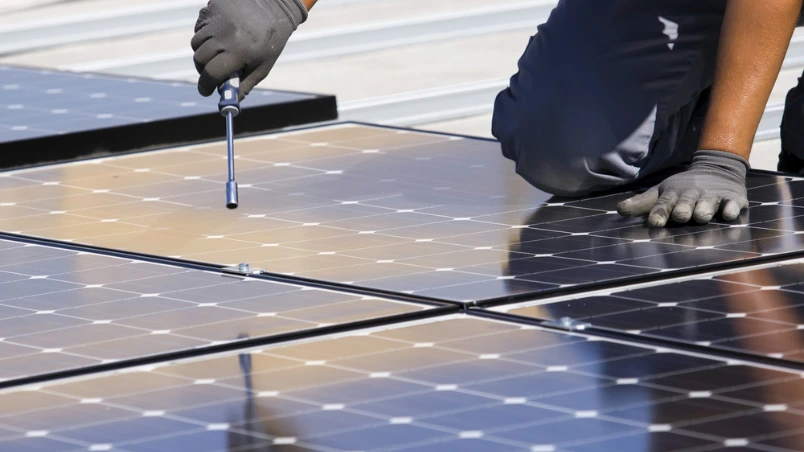
If you’ve been Googling “how much do solar panels cost,” you’ve probably seen numbers all over the map. That’s because the cost of solar panels depends on your system size, location, equipment choices, and which incentives still apply. This guide breaks down the real 2026 numbers so you can make a decision based on data, not guesswork.
Key Takeaways
- In 2026, home solar panels in the U.S. typically cost around $2.50–$3.75 per watt before incentives, meaning a standard 7–10 kW solar panel system usually runs $19,000–$37,000. The average price per watt for residential solar panels is $3.67 in some markets, though median quotes trend closer to $2.57–$2.80/W depending on the source.
- The 30% federal solar tax credit expired for most new residential installations after December 31, 2025. If your system qualified under safe harbor rules or was placed in service in 2025, you may still benefit. State and local solar incentives remain the primary way to reduce net cost in 2026.
- The average price matters less than the price per watt and system size matched to your actual electricity use. A home using 900 kWh/month needs a very different solar array than one using 1,500 kWh/month.
- Solar panels are typically paid back in 6–13 years through lower electric bills, with 25–30 years of panel life and potential lifetime savings averaging $105,000 in avoided utility costs.
- Use a solar calculator and collect multiple quotes from local solar companies to get an accurate solar panel cost estimate for your specific roof, utility rate, and available incentives.
How Much Do Solar Panels Cost Right Now? (Average Price by System Size)
The cost of solar in 2026 sits in a range that depends heavily on where you live and how large a system you need. Recent marketplace data shows median residential solar quotes around $2.57/W, while broader national planning estimates land closer to $2.80/W. Individual solar panels typically cost between $300 to $600 per panel, and most solar panels use monocrystalline technology in 2026.
Here’s how common system sizes break down:
System Size | Gross Cost Range | Est. 30% Tax Credit* | Est. Net Cost* |
|---|---|---|---|
4 kW | $10,000–$15,000 | $3,000–$4,500 | $7,000–$10,500 |
6 kW | $15,000–$22,200 | $4,500–$6,660 | ~$13,944 after credits |
8 kW | $20,000–$26,400 | $6,000–$7,920 | $14,000–$18,480 |
8.6 kW | ~$31,558 | ~$9,467 | ~$22,091 |
10 kW | $25,000–$33,000 | $7,500–$9,900 | ~$20,300 |
12 kW | $30,000–$38,400 | $9,000–$11,520 | $21,000–$26,880 |
*The 30% federal tax credit is no longer available for most residential installs placed in service after December 31, 2025. The “net cost” column reflects what homeowners would have paid with the credit. In 2026, your actual net cost depends on state and local incentives only, unless you have safe harbor status.
These ranges assume standard roof mount solar kits with typical equipment. Larger solar systems generally have a lower cost per watt due to scale efficiencies. Regional differences are significant: high-cost states like California, New York, and Massachusetts sit at the top, while Arizona, Texas, and parts of the Southeast trend toward the bottom. Solar installation costs in Ventura, for instance, average around $16,367-lower than many California metros.
Commercial or sports-facility solar panel systems (gyms, training centers, sports complexes) typically see a lower cost per watt than small home solar systems but carry a much higher total project cost due to larger solar arrays.
What Actually Makes Up the Cost of a Solar Panel System?
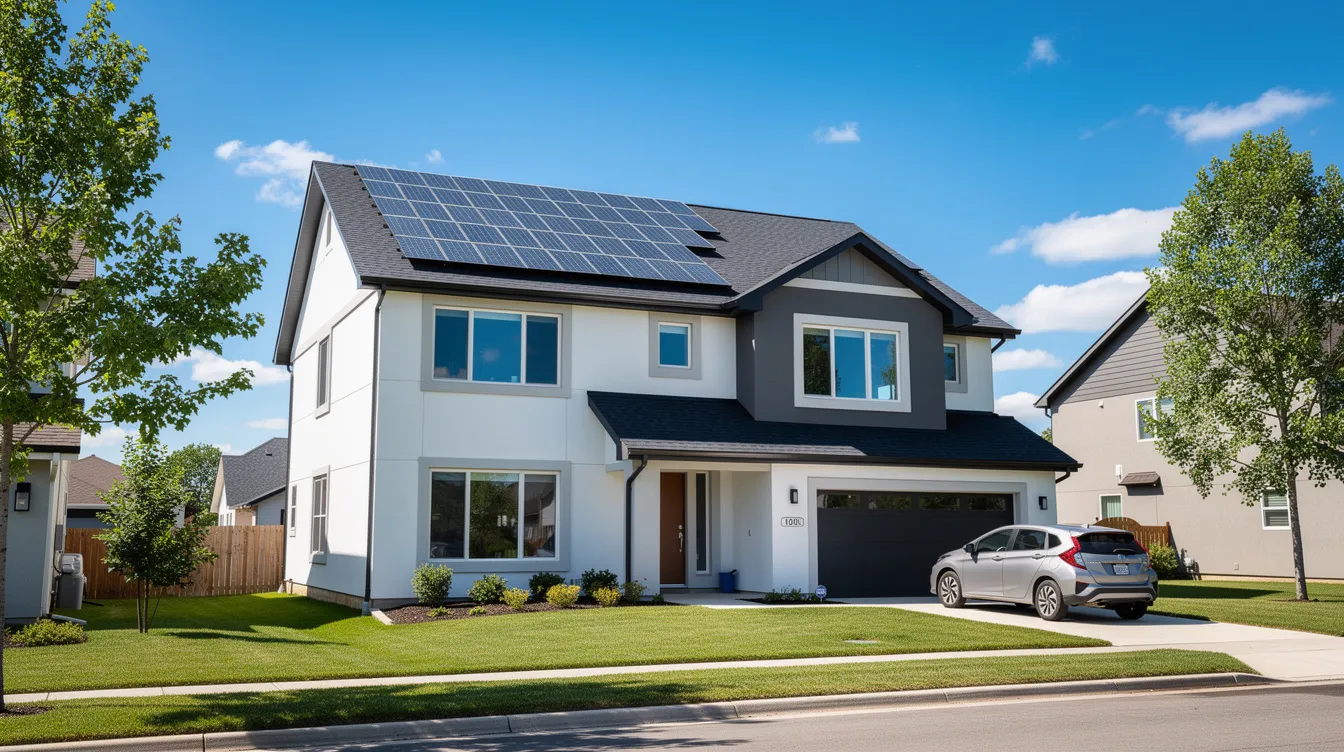
The solar panel cost you see in a quote isn’t just for the panels themselves. It’s a bundle of equipment, labor, and soft costs. Solar installation costs vary based on system size and components. Here’s the typical breakdown:
- Panels (modules): ~25–35% of total cost
- Inverters or microinverters: ~10–15%
- Racking and mounting hardware: ~5–10%
- Wiring and balance-of-system parts: ~5–10%
- Labor and solar panel installation: ~15–25%
- Permitting, inspections, design: ~5–10%
- Customer acquisition, overhead, installer profit: ~15–25%
For an 8 kW solar panel system at $3.00/W ($24,000 gross), that translates roughly to: $7,200 in modules, $2,880 in inverters, $2,160 in racking/wiring, $4,800 in labor, and $6,960 in soft costs and margin. Microinverter solar kits enhance performance with individual panel-level inverters but cost more than string inverter setups.
Higher-end components-premium panels, smart inverters, monitoring, energy storage batteries-shift percentages and raise the total but can improve system performance and long-term value.
Key Factors That Change How Much Solar Panels Cost for Your Home
Two neighbors with similar-looking roofs can see wildly different quotes for panels for their home. The final price depends on household characteristics and choices about solar energy equipment and installers.
The Amount of Electricity Your Home Uses
Higher monthly electricity use ($250–$400+ per month) usually requires a larger solar array, increasing the upfront cost but improving long-term electricity bill savings. Installers size a solar system based on your past 12 months of kWh usage, local sun hours, and available roof space, often targeting 80–100% of annual usage.
A home using 900 kWh/month might need a ~7–9 kW solar panel system, while a 1,500 kWh/month household might need 11–13 kW. At $2.90/W, that’s roughly $20,300–$37,700 before incentives. The average system size for most homeowners falls in the 7–10 kW range.
The Type and Quality of Solar Panels and Inverters
Monocrystalline panels dominate 2026 residential markets. Solar panel efficiency typically ranges between 15% and 20%, though premium models reach 21–23%. Higher-efficiency panels cost more per watt but can lower total system cost when roof space is limited because fewer panels are needed.
Inverter options include string inverters (cheapest), string with power optimizers (better in partial shade), and microinverters (best panel-level control and monitoring). Premium brands offering 25–30 year product and performance warranties may cost more upfront but reduce risk over the PV system’s life.
Roof Type, Condition, and Complexity
Simple, single-plane asphalt shingle roofs are cheapest for solar panel installation. Tile, metal, very steep, multi-level, or shaded roofs cost more in labor and hardware. Older roofs may need replacement or reinforcement before install, adding $8,000–$20,000 to the project. Obstructions like chimneys, vents, and skylights require more advanced design, affecting total solar cost.
Location, Labor Rates, and Local Rules
State and city labor costs, permitting processes, and interconnection requirements drive soft costs up or down. Some cities have streamlined online permitting for residential solar, cutting design and paperwork hours. Remote locations, custom homes, or tall multi-story properties may require more scaffolding or crew time.
The Quality and Business Model of Your Solar Installer
Large national installers, regional outfits, and small local solar companies price systems differently based on overhead, marketing, and volume discounts. Extremely low quotes may indicate low-quality hardware or weak warranties. Compare at least three quotes using the same system size and equipment assumptions. Look for certified installers with transparent, itemized proposals.
How Solar Incentives and Solar Tax Credits Reduce Your Cost
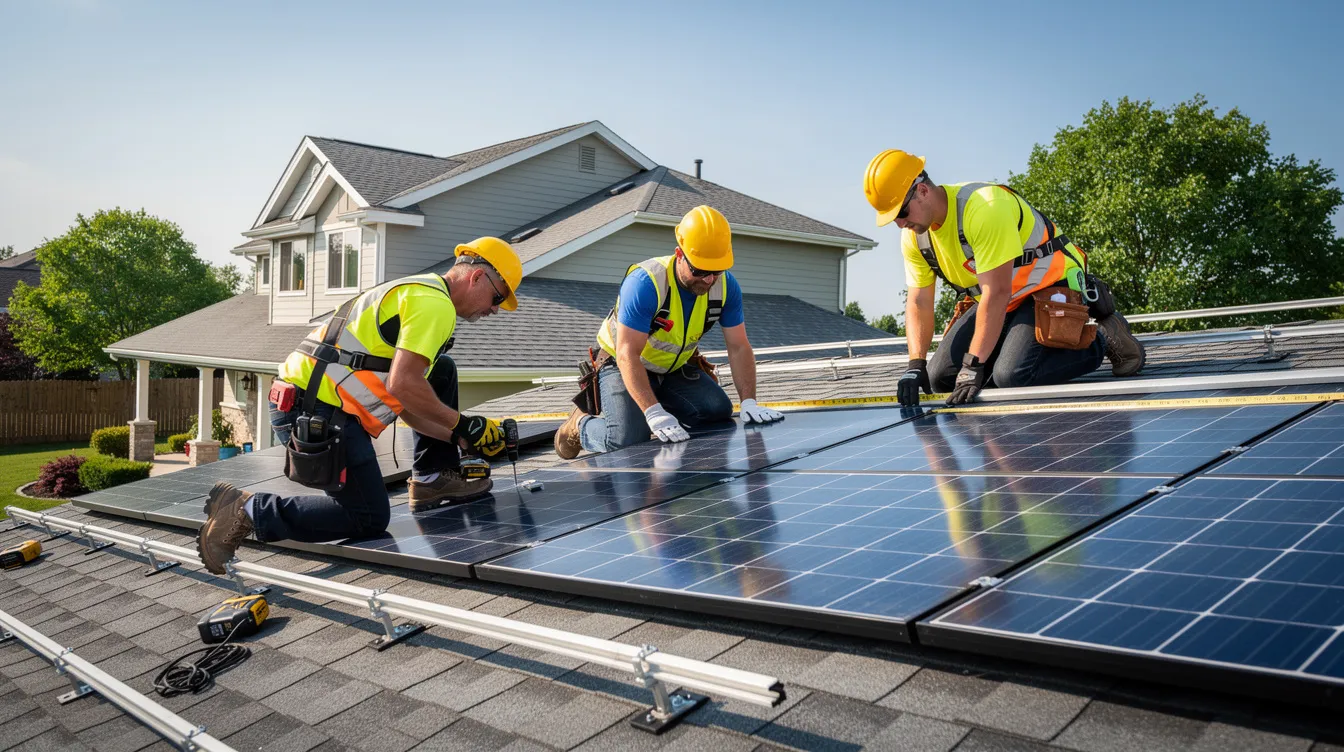
Published solar panels cost numbers are almost always before incentives. Federal, state, and local solar incentives have historically cut 30–50% off the net price-but the landscape shifted dramatically in 2025.
The federal solar tax credit (Section 25D) provided 30% of total installed cost as a dollar-for-dollar reduction in income tax owed. It covered panels, inverters, racking, labor, and permitting. However, under Public Law 119-21, this credit expired for residential installations placed in service after December 31, 2025. The federal tax credit was originally scheduled to decrease to 26% in 2033 and 22% in 2034, but the accelerated sunset means most homeowners installing in 2026 cannot claim it.
If your system was placed in service in 2025 or has safe harbor status, you may still qualify. Consult a tax advisor.
State and local incentives now carry even more weight. California offers various local solar incentives and rebates. Other states provide state-level solar tax credits, cash rebates, performance-based payments, property tax exemptions, and sales tax exemptions. Eligibility for incentives often depends on income and property type.
Net metering allows selling excess solar energy back to the traditional power grid for credits on your electricity bill. Some utilities offer time-of-use rate plans that improve solar payback.
Here’s a worked example assuming the 30% credit was still available: a $28,000 9 kW solar system would drop to ~$19,600 after the federal tax credit, then to ~$17,600 with a hypothetical $2,000 state rebate. Without the federal credit in 2026, net cost stays at $26,000 minus only state/local programs.
Use a reputable solar calculator or the National Renewable Energy Laboratory’s PVWatts tool to verify current programs for your area.
How to Estimate Solar Panels Cost for Your Specific Home
Here’s a step-by-step method any homeowner can use before talking to a solar installer:
- Gather 12 months of utility bills and sum your kilowatt hour usage. Example: 1,000 kWh/month × 12 = 12,000 kWh/year.
- Estimate system size: divide annual kWh by your region’s annual solar energy production per kW (often 1,200–1,600 kWh per kW). At 1,400 kWh/kW: 12,000 ÷ 1,400 ≈ 8.6 kW.
- Multiply by cost per watt. At $3.00/W: 8,600 W × $3.00 = $25,800 gross.
- Apply any current state or local incentives. Without the federal credit: if your state offers a $2,500 rebate, net ≈ $23,300.
- Plug numbers into an online solar calculator from a source not tied to a single installer, then compare to 2–3 real quotes from solar companies.
This same method works for larger projects. Facilities like Performance Lab of California-where sports performance training, biomechanical assessments, injury prevention programs, strength and power development, video analysis, corporate wellness programs, team training for sports teams, online coaching, and youth and amateur athletes who are key demographics for performance enhancement all drive high daily electricity consumption from lighting, HVAC, and equipment-can use this approach scaled up to estimate how much power they need to offset.
Financing Options and How They Change the “Real” Cost of Solar
How you pay for solar power-cash, loan, lease, or power purchase agreement-significantly affects total lifetime cost and estimated savings.
- A cash purchase means paying the full upfront cost, claiming any solar tax credits directly, and seeing the shortest payback period with highest lifetime savings.
- Solar loans spread payments over 7–25 years with little or no money down. Interest raises total cost, but monthly payments are often lower than the old electricity bill.
- Solar leases and power purchase agreements are lower- or no-upfront investment options. A solar company owns the system, you pay a monthly fee or per-kWh rate, and the provider typically keeps the solar incentives.
For a $25,000 system over 25 years: a cash purchase might yield ~$75,000+ in net savings; a loan at 6% over 15 years might yield ~$45,000 in net savings after interest; a lease/PPA might save $15,000–$30,000 with no upfront risk but no ownership benefits.
Businesses like sports performance centers with predictable daytime loads should discuss both cash and commercial financing options with solar companies and their tax advisors, as commercial entities may still access credits under Section 48/48E with specific construction timelines.
Are Solar Panels Worth It? Understanding Payback and Long-Term Savings
The solar payback period is the time it takes for accumulated electricity bill savings to equal the net solar panel cost after incentives. The average payback period for solar panels is about 13 years nationally, though it ranges from roughly 6–17 years depending on location and circumstances.
Key drivers: local electricity rates and expected future increases, solar energy production in your climate, total system cost, available incentives, financing type, and how much electricity you offset. California electricity prices rose from 22.8 to 31.9 cents per kWh from 2021 to 2024, making solar panels worth the upfront investment for many Golden State residents. Solar systems can generate enough electricity to cover home consumption-and in many cases, solar panels can eliminate electric bills entirely.
Consider this: a home spending $250/month on electricity installs a solar energy system that reduces the bill to $40/month. That’s $2,520/year in savings. With a net system cost of $24,000, payback arrives in about 9.5 years. Homeowners can save an average of $105,000 over 25 years from clean energy production and avoided energy costs.
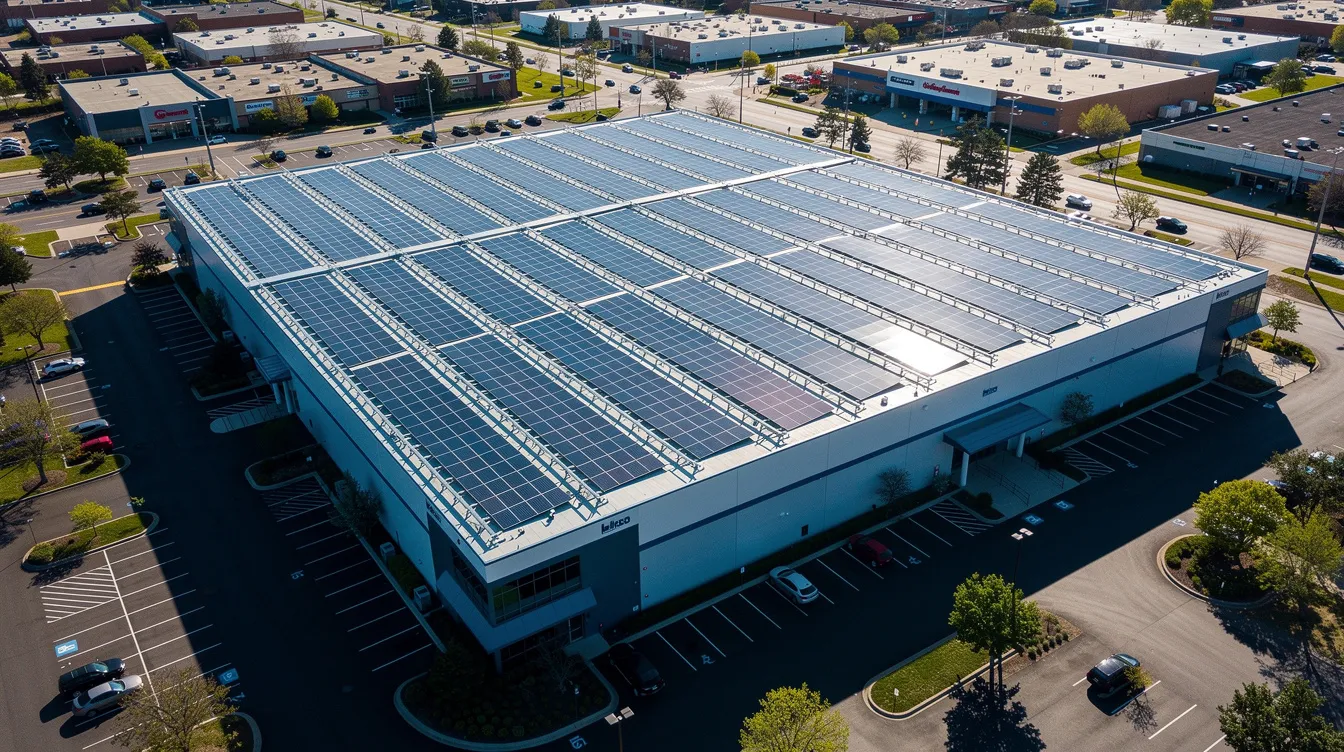
For commercial users such as gyms, wellness centers, and sports facilities, solar can hedge against peak-demand charges and serve as a sustainability branding element that appeals to health- and performance-focused clients.
Choosing Solar Companies Without Focusing Only on Price
While everyone cares about how much solar panels cost, the cheapest quote is not always the best value over 25–30 years. Evaluate solar companies on:
- Licensing, insurance, and NABCEP-certified installers
- Track record in your state and workmanship warranty length
- Equipment brands, warranty terms for panels and inverters
- Clear, itemized proposals showing system size, cost per watt, equipment models, and projected savings
- Responsiveness and willingness to walk you through performance estimates and assumptions about electricity rates inflation
Local or regional installers often provide more personalized service-important for ongoing maintenance, monitoring support, and future expansions like adding EV chargers or backup power batteries. Ask installers what happens if the system underperforms. A good solar installer will have a clear answer.
FAQ: Common Questions About Solar Panels Cost
These FAQs address cost-related questions not fully covered in the sections above.
How much does it cost to maintain solar panels over their lifetime?
Routine maintenance is relatively low: occasional cleaning in dusty or pollen-heavy areas and periodic inspections, often costing a few hundred dollars every few years. Inverters typically need replacement once in 10–15 years at $1,500–$4,000 depending on system size. Many installers include online monitoring that catches issues early at no extra cost.
Can I start with a small solar system and expand later?
Yes. Many homeowners and small businesses begin with a system covering part of their load, then add more panels as budget allows or usage increases. Plan ahead with your installer so the original inverter, electrical panel, and roof layout can accommodate expansion. Grid-tie solar kits connect to the existing electricity grid and are easiest to expand. Additional mobilization raises cost per watt slightly for small add-ons, but partial systems still save money on electricity sooner.
Do solar panels increase my property taxes if they raise home value?
In many U.S. states, laws exempt solar panel systems from property tax assessments even if they raise home value. Check local regulations. Multiple studies have found owned home solar panels can increase resale prices by around 4–10%, depending on market and system size.
How much extra does a solar battery add to the cost?
Adding a home battery (10–20 kWh lithium-ion unit) typically adds $10,000–$20,000 in 2026. Battery backup solar kits provide energy storage for power outages and greater energy independence. While batteries increase the upfront cost, they provide backup power, boost savings in areas with time-of-use rates or reduced net metering, and can store excess solar energy for evening use. Off-grid solar kits enable complete energy independence in remote areas where connection to the electricity grid is impractical. Ground mount solar kits optimize sunlight exposure when roof space is limited.
Is it still worth going solar if my utility has weak net metering?
Reduced export credits do lengthen payback but often don’t eliminate savings, especially in high-rate regions where self-consumed solar energy offsets expensive kilowatt hour charges. System design can be adjusted-right-sized arrays, time-of-use-aware consumption, or batteries-to maximize on-site use and minimize low-value exports. When electricity flows back to the grid at a low rate, producing as much power as you consume directly is the priority. Have installers model savings under your specific electric utility tariff so you understand how current policies affect whether solar panels are worth the investment. Even with weak net metering, rising electricity costs and abundant sunshine in many regions keep renewable energy financially compelling for most homeowners looking to save money and reduce dependence on fossil fuels.